Orys Baratheon
Fire & BloodOrys Baratheon rose from uncertain, reportedly bastard birth to become Aegon Targaryen’s closest companion, trusted military commander, and first Hand of the King. His life joined conquest to reconciliation: he helped defeat Argilac Durrandon, then married Argilac’s daughter and took the fallen king’s arms and words as his own. Later, known as Orys One-Hand, he returned to war against Dorne and died on the march home, leaving a legacy marked by both political alliance and personal vengeance.
Identity and Background
Orys was Lord Aegon’s childhood friend and champion, and the only close companion attributed to Aegon in the account of the Conqueror’s character. His parentage was less certain in public memory. When Argilac rejected a proposed marriage alliance, he objected to the suggestion that his daughter be given to a man he considered a bastard. The accusation was also repeated as a rumor that Orys was Aegon’s baseborn half-brother.
A later account identifies Lord Aerion as Orys’s father and calls Orys a dragonseed: a bastard brother to Aegon. It leaves open whether Orys had been conceived through the right of the first night, a custom associated with the stories of Targaryen lords fathering children among their subjects. The distinction between what was known about his father and what remained uncertain about his conception matters: his birth was a source of insult in Argilac’s diplomacy, but it did not prevent Aegon from entrusting him with power or from publicly affirming their bond.
Service to Aegon and the Conquest
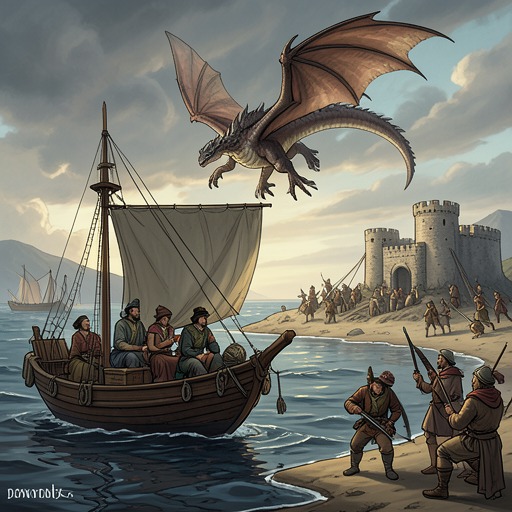
Aegon’s counteroffer to Argilac proposed that the Storm King’s daughter marry Orys, in exchange for lands that would place Aegon’s allies along the Blackwater and beyond. The proposal was political as well as personal: it offered a marriage tie to the Durrandon line and a territorial settlement. Argilac refused it angrily, treating the proposed match as an affront to his daughter’s status. His response ended the negotiation and preceded the war between the two rulers.
At the final confrontation, Orys led his men against Argilac after the Storm King’s charge had been broken. He dismounted before facing the older king and offered him a final chance to yield. Argilac refused, and the two fought; each was said to have wounded the other. Argilac died still fighting, and news of his death broke the resistance of his lords and knights. Orys’s conduct in the encounter is presented as a deliberate contrast to the humiliation and defeat around them: he met his opponent on foot and gave him the choice to surrender before the fight continued.
After the Stormlanders’ defeat, Argilac’s daughter Argella declared herself Storm Queen and refused to yield Storm’s End. The garrison eventually opened the castle and delivered her to Orys’s camp. Orys freed her, covered her with his cloak, offered her wine, and told her of her father’s courage and death. He then married Argella and adopted the Durrandon arms and words. The crowned stag became his sigil, Storm’s End his seat, and the marriage joined his new position to the defeated dynasty’s inheritance.
Lordship and the King’s Hand
At the Aegonfort, Aegon summoned defeated lords to lay down their swords, then confirmed them in their lands and titles. He rewarded his own supporters with offices and honors, placing Daemon Velaryon over the royal fleet and appointing Triston Massey master of laws and Crispian Celtigar master of coin. Orys received the most intimate public declaration of trust: Aegon named him his shield and strong right hand. The maesters consequently reckon Orys the first Hand of the King.
His appointment gave institutional form to a relationship that had begun in childhood. Orys was not simply a battlefield ally: he stood at the center of Aegon’s new court as a principal officer of the crown. The Conqueror’s willingness to elevate a man whose birth could be used to question his standing also sits beside his broader approach to defeated opponents. Aegon restored conquered lords to their positions when they submitted, while honoring those who had supported him. Orys embodied the other side of that settlement: a close ally given authority and a lordship built upon a marriage with a conquered house.
Captivity, Vengeance, and Death
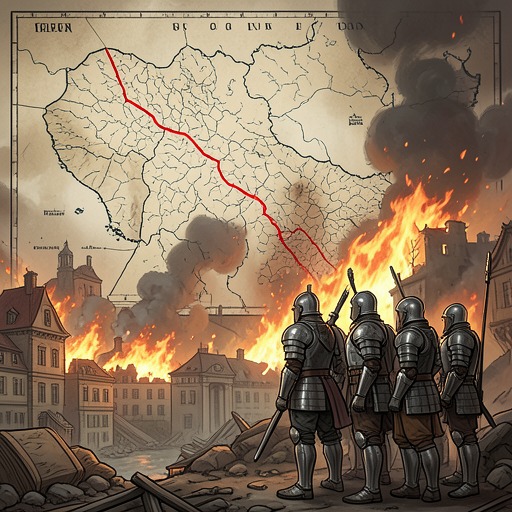
The Dornish war brought a harsher turn in Orys’s fortunes. In 7 AC, he and other lords captured on the Boneway were ransomed for their weight in gold. On their return, Orys had lost his sword hand, cut off while he was captive so that he could never again take up a sword against Dorne. Aegon answered by attacking the Wyls’ mountain strongholds with Balerion, destroying several keeps and watchtowers, but the Wyls escaped into caves and tunnels.
Orys later rode out from Storm’s End for one last campaign against the Dornish. By then he was known as Orys One-Hand. When Walter Wyl, the son of the man who had taken Orys’s hand, was brought before him wounded but alive, Orys exacted a severe mutilation in retaliation, describing it as repayment and usury for the earlier loss. The reprisal made his own injury the measure of his justice: the old grievance was not forgotten, but converted into a personal debt that he believed had to be collected.
Orys died on the march back to Storm’s End from wounds he had received in battle. His son Davos later maintained that Orys died content, recalling the objects Orys had kept from his punishment of Walter Wyl. The account leaves his death bound to the same pattern as his career: service to the crown, a lasting feud with Dorne, and a public identity shaped by the hand he had lost and the vengeance he pursued. His marriage and lordship had made him part of the political settlement after conquest; his final campaign ensured that he was also remembered as a figure of the continuing war.